Credit to: SUPERWINDOWS
SUPERFRAME | Idea

SUPERFRAME © SUPERWINDOS

In order to achieve a significant improvement in the heat insulation of windows, the insulated glass units of our design should be fitted in window frames of generally similar thermal transmission parameters. As frames constitute one of the main routes of heat loss in insulated glazing due to the traditional window design, the problem of finding the right window frame still seems unresolved.

The unsatisfactory thermal insulation parameters of window frames are due, among other reasons, to heat leakage bridges, which, in turn, result from the thermally flawed design of door and window joinery and the incorrect fitting of window frames in reveals. Further progress in the technology of extremely heat insulated glass units would make no sense if the weakest link in the shell of a building (particularly a passive one) were not eliminated, and at the present stage of development of energy saving technologies, sash frames, window frames and insulated glass unit edges represent this weakest link. (more…)

Tagged with:
 

Credit to:  Clean Technica (http://s.tt/13aox)

By Susan Kraemer

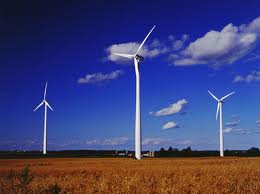
Two huge wind farm approvals totaling 1,400 MW (1.4 GW) bring New Zealand closer to its target of 90% renewable electricity by 2025. The small nation of four million gets more than three quarters of its electricity from clean energy already: 79%.

Geothermal and hydropower have long supplied the majority of New Zealand’s power, but hydro is at a natural limit. Wind is well positioned to fill the gap, according to Wind Energy Association CEO Eric Pyle. ”Wind power could generate 20% of New Zealand’s electricity by 2025, up from 4% today.”

That means growing wind from its current 615 MW to around 3,000MW.  These two approvals are a significant step forward, supplying nearly half of that at a total of 1,400 MW. The two large utility-scale wind farms are rated at 860 MW and 540 MW. (Another huge farm in the coal-rich South Island was denied, Meridian Energy is fighting to overturn a decision against its 630 MW Project Hayes in Otago.) (more…)

Tagged with:
 

Baesweiler School: Passive House in Practice

Credit to: http://www.az-web.de/

Baesweiler:  This school is still powerfully built. The administration wing has been completely renovated, the work on section III and IV relate to the Education Centre and the new cafeteria nearing completion.
Is still work to be done on scientific tract. Last is then restored to the gym. The school is currently being renovated to Baesweiler Passive House – a nationwide, unique and yet so highly regarded and award-winning project. (more…)

Tagged with:
 

Source: http://pubs.acs.org/

By Bethany Halford

TEMPLE OF NANOSCIENCE Rome’s Dio Padre Misericordioso Church, also known as the Jubilee Church, retains its bright white color because of nanostructured titanium dioxide. Liao Yusheng 

TEMPLE OF NANOSCIENCE Rome’s Dio  Padre Misericordioso Church, also known as the Jubilee Church, retains  its bright white color because of nanostructured titanium dioxide.

With its soaring concrete sails reaching high into the sky, the Dio Padre Misericordioso Church, just east of central Rome, beckons religious and architectural devotees alike. The structure is also something of a temple to nanoscience—for it retains its bright white hue thanks to the presence of nanostructured titanium dioxide particles embedded within the cement binder that was used to make its concrete walls.

Completed in 2003, the church, also known as the Jubilee Church, is a flagship when it comes to the use of nanotechnology in construction. But there are more humble examples, too. Whether it’s in steel, concrete, or windows, nanotechnology is finding a growing number of applications in the construction industry, where it promises to make structures that last for centuries and look as clean as the day they were built.

One only has to look at the Jubilee Church to see why it is the foremost example of what nanotechnology has to offer the construction industry. It was designed by Richard Meier, an American architect with a reputation for creating bright white structures that he wants to stay that way. So far, the concrete shows no signs of darkening. Italcementi, the company that supplied the material for the church, checks it each year for signs that its white color is still as bright as the day it was cast.

Nanostructured TiO2 particles theoretically will keep the concrete white forever, even in smoggy Rome, says Luigi Cassar, one of the material’s inventors. Titanium dioxide, known for its snowy white hue, is used as a pigment in paint and food coloring. But it has self-cleaning properties as well. When ultraviolet light strikes the anatase form of TiO2, it excites the material so that it becomes a catalyst for oxidizing organic grime. (more…)

Tagged with:
 

Press releases

The Passive House: Cost efficient and proven 32,000 times
More than 50 countries at the 15th International Passive House Conference


Picture sources: NHT and LANG consulting
Pictures: Passive Houses of every size are included in the framework of the excursions at the 15th Int. Passive House Conference in Innsbruck
Picture 1: O3 Olympic Village with 444 apartments by the Neuen Heimat Tirol, Reitter – Eck & Reiter Architects ZT GmbH and din a4
Picture 2: Lodenareal housing complex with 354 apartments by the Neuen Heimat Tirol, Architectsn teamk2
Picture 3: Energiepark Innsbruck with a selection of Passive House properties for every taste. Picture sources: NHT and LANG consulting

Darmstadt/Innsbruck/Vienna, 12.05.2011 – The Passive House saves 80-95% energy as well as CO2 emissions, and its construction is hardly more expensive than that of conventional buildings. It is therefore not surprising that there are already 32,000 buildings in Europe that have been built to the Passive House Standard, which has already established itself as a trend-setter for energy-efficient construction and also forms the basis for the “Nearly Zero Energy Building”. The world’s largest convention for energy-efficient construction will be held in Innsbruck from 27th-28th May 2011 where more than 1,200 participants will discuss solutions for sustainable construction.
Read entire press release ( PDF 224 KB)

Energy efficiency – a real alternative!

Source: http://www.passivehouse-international.org/

Tagged with:
 

Credit to: http://www.treehugger.com/
By Alex Davies, Paris, France

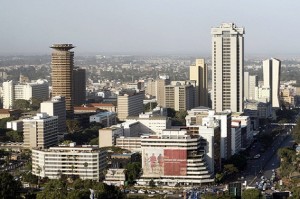
Nairobi, Kenya. Photo: DEMOSH under a Creative Commons license.

This week, it was announced that a joint plan from the United Nations Human Settlements Programme (UN-HABITAT) and the United Nations Environment Programme (UNEP) to promote energy efficiency in East African buildings was approved by the Global Environment Facility (GEF), to the tune of $2,853,000. Now that the acronyms and numbers are out of the way, here’s what’s happening:

(more…)

Secure your position in Europe’s third largest wind market aiming for 16GW of wind capacity by 2020

Green Renewable Energy

4-15 June, Rome Don’t miss out on attending Wind Power Italia to hear from Roberta Benedetti (EON Climate and Renewables), Pio Forte (UniCredit Leasing), Carl Durante (Maestrale) and Paolo Grossi (RWE Innogy) along with other senior practitioners shaping the Italian wind industry.

Discover how they intend to maintain the momentum of the Italian market by delivering a packed agenda that will ensure your project remains profitable and arm you with the information and contacts you need.

Wind Power Italia will provide you the opportunity to meet with wind project developers, utilities, financiers, banks, technology developers and the all important policy-makers, to set the agenda for the development of the Italian wind market. The wind power industry is poised to emerge from a brief lull caused by regulatory ambiguity. With the government’s delayed renewable energy decree due in March, it is critical to move quickly to secure your position in a growing marketplace. (more…)

Tagged with: