 In Australia, according to an item by Hedley Thomas in ‘The Australian’ the handmade mudbrick — natural subsoil mixed with straw and water, and dried by the sun — symbolises Earth’s sustainability, green values and a low carbon footprint. From hippies putting up bush huts, to the well-off building impressive mansions, most agree on the insulation quality and energy efficiency of mudbrick. But now architects and others in the earth building industry, are at their wits’ end. Some are on the verge of admitting defeat to federal and state bureaucracies, which do not recognise the environmental value of the mudbrick. (more…) In Australia, according to an item by Hedley Thomas in ‘The Australian’ the handmade mudbrick — natural subsoil mixed with straw and water, and dried by the sun — symbolises Earth’s sustainability, green values and a low carbon footprint. From hippies putting up bush huts, to the well-off building impressive mansions, most agree on the insulation quality and energy efficiency of mudbrick. But now architects and others in the earth building industry, are at their wits’ end. Some are on the verge of admitting defeat to federal and state bureaucracies, which do not recognise the environmental value of the mudbrick. (more…) |
The First Active House in Russia is designed to set a new standard for residential house construction in Russia. The house design is based on the Active House principles.

Russia, Naro-Fominsk area suburbs: Active House
Energy
The First Active House in Russia exploits a variety of energy sources, which are integrated in the overall design. The features contributing towards a positive energy balance include a highly effective heat pump, thermal solar collectors for production of hot water and floor heating, and a PV solar cell system for generating electricity. (more…)
Source: http://pubs.acs.org/
By Bethany Halford
 Liao Yusheng
TEMPLE OF NANOSCIENCE Rome’s Dio Padre Misericordioso Church, also known as the Jubilee Church, retains its bright white color because of nanostructured titanium dioxide.
With its soaring concrete sails reaching high into the sky, the Dio Padre Misericordioso Church, just east of central Rome, beckons religious and architectural devotees alike. The structure is also something of a temple to nanoscience—for it retains its bright white hue thanks to the presence of nanostructured titanium dioxide particles embedded within the cement binder that was used to make its concrete walls.
Completed in 2003, the church, also known as the Jubilee Church, is a flagship when it comes to the use of nanotechnology in construction. But there are more humble examples, too. Whether it’s in steel, concrete, or windows, nanotechnology is finding a growing number of applications in the construction industry, where it promises to make structures that last for centuries and look as clean as the day they were built.
One only has to look at the Jubilee Church to see why it is the foremost example of what nanotechnology has to offer the construction industry. It was designed by Richard Meier, an American architect with a reputation for creating bright white structures that he wants to stay that way. So far, the concrete shows no signs of darkening. Italcementi, the company that supplied the material for the church, checks it each year for signs that its white color is still as bright as the day it was cast.
Nanostructured TiO2 particles theoretically will keep the concrete white forever, even in smoggy Rome, says Luigi Cassar, one of the material’s inventors. Titanium dioxide, known for its snowy white hue, is used as a pigment in paint and food coloring. But it has self-cleaning properties as well. When ultraviolet light strikes the anatase form of TiO2, it excites the material so that it becomes a catalyst for oxidizing organic grime. (more…)

Multilingual sustainable construction glossary
The beginning of this year’s EU Sustainable Energy Week (EUSEW) was marked by the launch conference of the multilingual version of the Common Language ‘sustainable construction glossary’. The multilingual version of this project was formally introduced on 11 April, at the European Economic and Social Committee (EESC), in partnership with the Architects Council of Europe (ACE) and the European Concrete Platform (ECP).
EESC President Staffan Nilsson launched the glossary. The conference was also attended by the director of the ACE, Adrian Joyce and Bernd Wolschner, president of the ECP. Vice President of the EESC Anna Maria Darmanin also participated in the conference, and the event was hosted by EESC TEN Section President Stéphane Buffetaut. There were discussions involving contributions from many experts in the field of sustainable construction, including non-governmental and national representatives, supplemented by senior officials from the European Commission. (more…)
Credit to: http://www.treehugger.com/
By Alex Davies, Paris, France
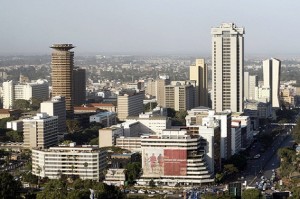
Nairobi, Kenya. Photo: DEMOSH under a Creative Commons license.
This week, it was announced that a joint plan from the United Nations Human Settlements Programme (UN-HABITAT) and the United Nations Environment Programme (UNEP) to promote energy efficiency in East African buildings was approved by the Global Environment Facility (GEF), to the tune of $2,853,000. Now that the acronyms and numbers are out of the way, here’s what’s happening:
Energy efficiency -a real alternative!
15th International Passive House Conference presents solutions

From the left: Dr. Karl Kienzl, Prof. Wolfgang Feist and Günter Lang during the Press Breakfast in Vienna. Photo: PHI / R. Meister
Darmstadt/Innsbruck/Vienna, 06.04.2011
The answer to the question of which energy is most environmentally acceptable is: less energy. Good energy efficient solutions are characterised by the fact that they provide more comfort and safety besides saving energy. They represent an advantage for users as well as investors and benefit the regional and European economy. In the case of buildings, the Passive House represents such a solution. This year the International Passive House Conference will take place in Austria. Highly efficient approaches for sustainable construction will be presented at the world’s most important and largest convention for energy efficient construction from 27th to 28th May 2011. Participants from all economic and business sectors are invited to join the committed Passive House regions. (more…)
Credit to: GEALAN 
“With the new ‘S 7000 IQ Passive House’ window system, GEALAN assemblers can round out their product range and at the same time – thanks to the powder-coated skirt– extend the available range of colours.
The advantages of S 7000 IQ Passive House:
- High-insulating window system: thanks to the cladding, Uw-values of 0.80 W/m²K can be achieved. With the right glazing, Uw-values as low as 0.61 W/m²K can be achieved.
- Various possibilities: the components of the S 7000 IQ series can be combined with passive house windows. Not only single lights but also meeting stiles, mullions and transoms are possible.
- Wide variety of colours: a wide variety of colours are available thanks to the special coating of the aluminium shell.
- Elegant optics: thanks to the avoidance of a sash-encompassing frame, the profiles affect a more slender appearance.
- Excellent impermeability: the four encompassing gaskets ensure an optimal seal against air drafts and driving rain. (more…)
